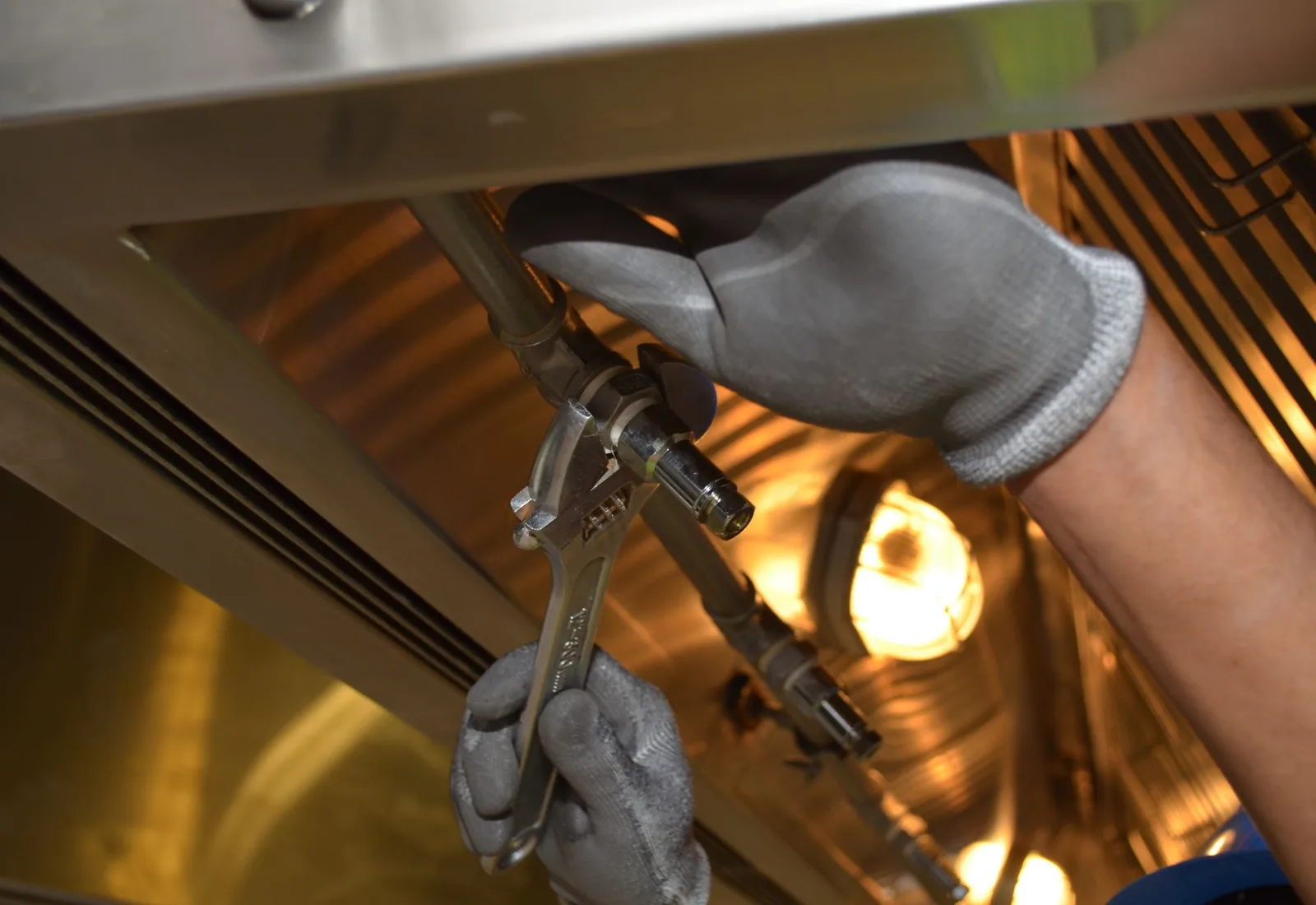
No hot water, a pilot that will not stay lit, a rumbling tank, rusty water or a puddle at the base. We find out which of those it actually is before quoting anything — and we tell you honestly when a repair is not worth doing.
It is the question every homeowner with a failing heater dreads, because it feels like a trap either way. Here is the line we actually use.
The tank is sound and a component has failed.
The tank itself has gone, or the maths stopped working.
Water heaters rarely fail cleanly. You notice something off — a lukewarm shower, a noise at 2am, a smell of rust. Here is what each symptom usually means.
A failed thermocouple or gas valve on a gas unit; a burnt-out element or tripped high-limit on an electric one. All four parts ride on the truck, so this is normally a same-day fix.
Get it diagnosed 02Sediment eating into the usable volume of the tank, or one of two electric elements failed so only half the tank heats. Often repairable, occasionally a sign the unit is undersized for the household.
Get it diagnosed 03Could be a loose T&P valve, a drain valve, or a failed union — all repairable. Or it could be the tank liner, which is not. We establish which before quoting a number.
Get it diagnosed 04Water boiling under a sediment bed on the tank floor. It is not dangerous, but it is costing you efficiency and tank life. A flush and descale usually resolves it.
Get it diagnosed 05A depleted anode rod, which is the sacrificial part that corrodes so the tank does not. Caught early, a new rod saves the tank. Left too long, the tank is already going.
Get it diagnosed 06Nearly always the thermocouple — a small part and about half an hour. One of the fastest and cheapest repairs we do, and a common reason people are quoted a whole new heater elsewhere.
Get it diagnosedRoughly a third of the calls we go out to for “a new water heater” turn out to need a part worth less than $200. We would rather do that job and be the people you call in four years when the tank genuinely does go.
If it does need replacingBased in Buckman, close-in SE. One flat rate anywhere inside city limits, with no travel surcharge and no zip code we treat as the edge of the map.
Tell us the symptom and the approximate age of the unit. We test it properly on site, then give you a flat-rate price in writing — with the repair and the replacement number side by side where both are realistic.
Most repairs land between $150 and $450 fitted — a thermocouple or a heating element at the low end, a gas control valve at the high end. You get the exact number in writing before we start, and there is no diagnostic fee whether you go ahead or not.
Usually, yes. The common failure parts for the units Portland homes run are on the truck: thermocouples, gas valves, upper and lower elements, thermostats, T&P valves and anode rods. Call before noon and same-day is realistic most weekdays.
Almost always a failed thermocouple — a cheap part and about thirty minutes of work. It is one of the quickest repairs we do. If a new thermocouple does not hold it, the next suspect is the gas control valve, which is a bigger part but still a repair rather than a replacement.
Not dangerous, but it is telling you something. That noise is water boiling underneath a layer of sediment on the tank floor, which makes the burner work harder and shortens the life of the tank. A flush usually clears it.
When the tank itself is leaking. A corroded liner cannot be patched, sealed or welded, and anyone who offers to is selling you a few more weeks. The same applies once a unit is over ten years old and the repair costs more than half a replacement — you would be spending good money on a tank that owes you nothing.
A proper diagnosis and a flat-rate price in writing — with no diagnostic fee and no obligation, anywhere in Portland.